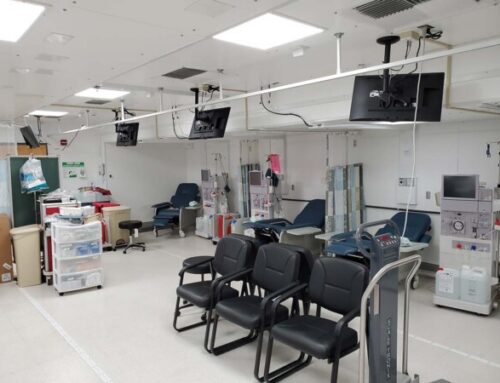
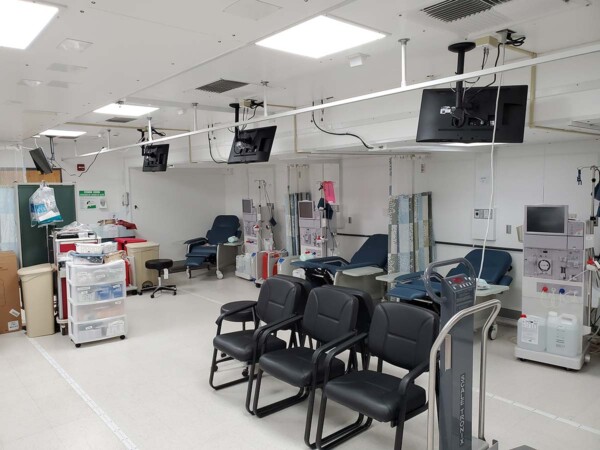
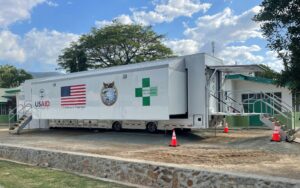
 Timor Leste’s mobile intensive care unit from Mobile Healthcare Facilities, in partnership with USAID and U.S. Indo-Pacific Command, shows the amazing impact that our mobile units are capable of and shows how their implementation in remote or small countries can make a difference.
Timor Leste is a developing country located on an island in Southeast Asia. The country experiences severe weather conditions including floods, tsunamis, monsoonal rains, and tropical cyclones. These weather conditions can cause high levels of damage and destruction to buildings. Medical facilities are limited on the island of Timor, and healthcare access is very difficult for citizens. Therefore, when USAID purchased a mobile intensive care unit from Mobile Healthcare Facilities, the safety and durability of the unit were key concerns. The facility needed to hold up to high standards and maintain lasting quality to properly serve Timor Leste’s patients. To test the unit’s durability and leak-proof set-up, local firefighters blasted the unit with a high-pressure fire hose. Staff and onlookers verified that the interior of the unit was completely dry afterwards, with not a single drop of water getting inside. It was crucial that the units could withstand the weather and this test showed the mobile units’ strength to handle intense conditions.
Many developing countries like Timor Leste have unique concerns and challenges surrounding healthcare, whether it be remote patients struggling to access care, a lack of funding for new healthcare buildings, or weather concerns that require heavy-duty facilities. Challenges like these can be mitigated by our mobile medical facilities.
With nine beds, the mobile ICU addition expanded Timor Leste’s national hospital’s capacity by 150%. The Guido Valadares Hospital can now serve greater numbers of people on the island. This was a vital change amidst the COVID-19 global pandemic.
COVID-19 is just one example of an emergency response that mobile healthcare facilities can assist with. Whatever the emergency may be, mobile units can be a faster alternative solution to providing additional healthcare and getting more patients treated.
The intensive care unit, which was launched on February 2nd, 2023, had a huge positive impact for the community.
“With this support, with this space and equipment, we could raise the bar for our emergency care, and our health care personnel in this unit can deliver their work even more professionally,” Bonifácio dos Reis, the vice-minister stated. The community was excited to have access to these high-quality units and celebrated the grand opening.
Zemma Semungus, the USAID Mission Director in Timor Leste, shared with Tatoli News that “the mobile ICU is a technology that gives a great change in the health sector in Timor Leste”. This change has opened doors for a brighter future of healthcare for the Timorese people.
Healthcare facilities are so valuable to those they serve, and patients can feel more secure seeing the strength and capability of the unit they depend on. Our facilities help patients to feel just as safe and secure as they would in a brick-and-mortar building and ensure that they have a great quality experience, just like in Timor Leste.